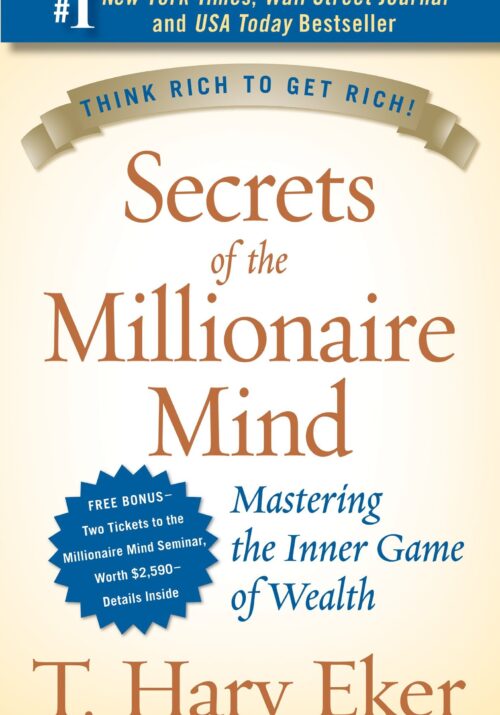
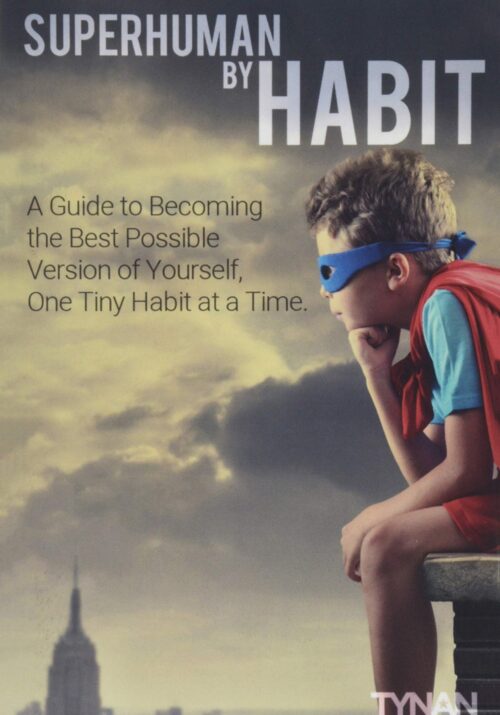
Trigger
Self-Image From “Dunce” TO GENIUS IN ONE EASY STEP
Goal Setting
Be A Fea Trainer
When you get the Man right, the world was right
Be a good finder
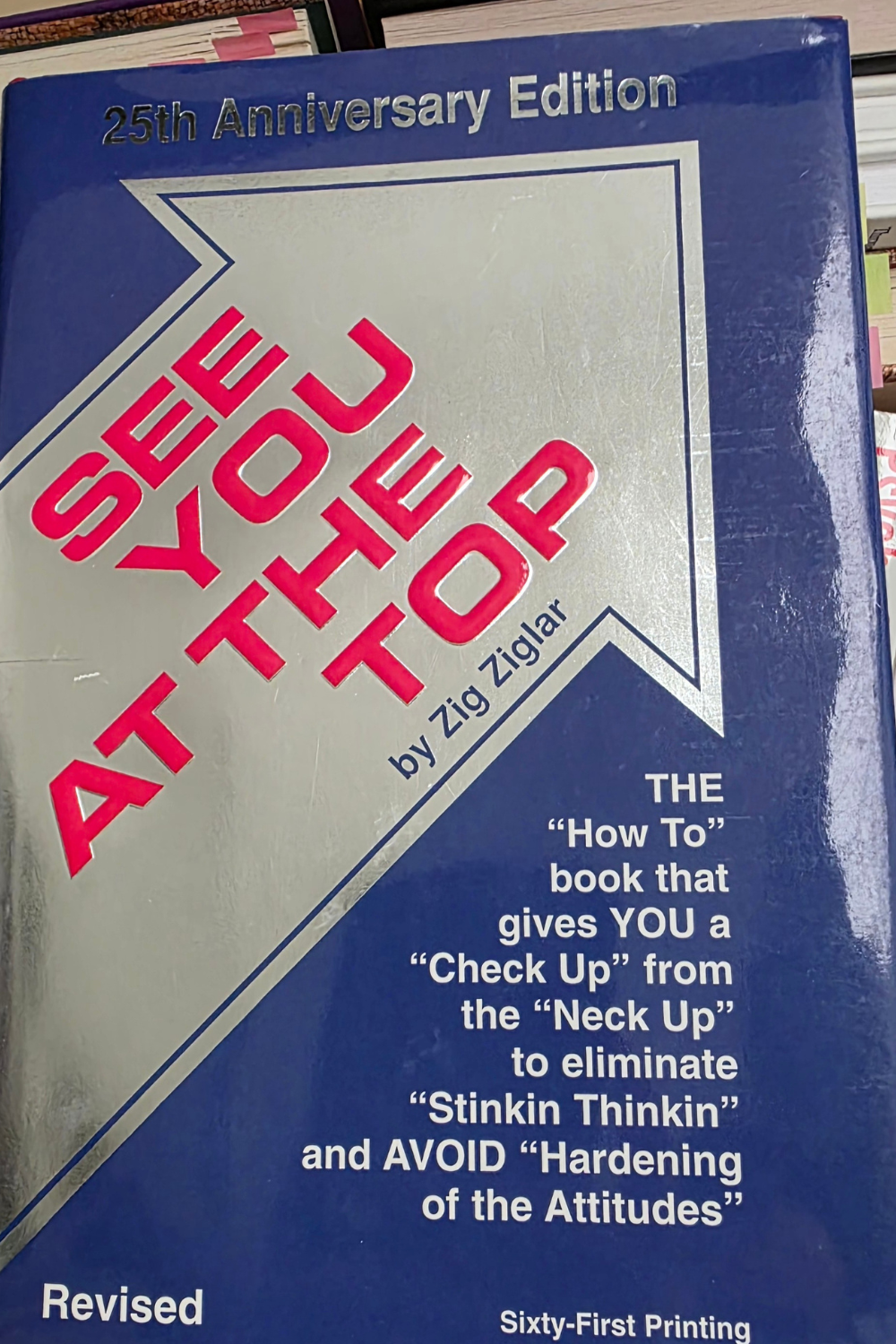
Big Idea#1 Trigger Page
While listening to a speaker, reading a book, or listening to a recording, you have heard or read something that really “triggered” your imagination. On those occasions you probably thought, “that reminds me,” or “that gives me an idea.” Try as you might at a later time, you often cannot recall the thought or idea that had been so clear in your mind a short time earlier. Since this is a characteristic of most people, I’m going to urge you to get a “Trigger Page” notebook. I suggest the standard stenographic pad because it is approximately the same size as this book and will be easy to carry. Divide the pages
I suggest you get both a red and black felt-tip pen to record your thoughts and ideas. Start by using the red pen at the bottom of the Trigger Page in Section 1 the first time you read the book. Use the black pen and move up to Section 2 of the Trigger page the second and subsequent times you read it. Let’s also urge you to underline and mark the portions of the book that are meaningful to you. These markings, combined with the thoughts and ideas you record, will personalize the book and make it “your” book. It will be so personalized that you will keep it and use it as a constant source of reference.
This reminds me of Ryan Holiday.
He calls this the common place. While researching The Obstacle Is the Way, He developed a system to capture and organize the insights that sparked something in me. Whenever a passage, quote, or idea struck me—whether from a book, podcast, video, or article—I’d write it down on an index card. I included the source: the author, the title, the page number or timestamp, and the date I found it. Then I’d file it in a box, sorted by theme or concept. Over time, this collection of note cards became the foundation for the book. Not all the ideas made it in—but they helped shape the ones that did.
Big Idea#2 Self-Image From “Dunce” TO GENIUS IN ONE EASY STEP
When Victor Seribriakoff was fifteen, his teacher told him he would never finish school and that he should drop out and learn a trade. Victor took the advice and for the next seventeen years he was an itinerant doing a variety of odd jobs. He had been told he was a “dunce,” and for seventeen years he acted like one. When he was 32 years old, an amazing transformation took place. An evaluation revealed that he was a genius with an IQ of 161. Guess what? That’s right, he started acting like a genius. Since that time he has written books, secured a number of patents, and has become a successful businessman. Perhaps the most significant event for the former dropout was his election as chairman of the International Mensa Society. The Mensa Society has only one membership qualification, a minimum IQ of 140.
The story of Victor Seribriakoff makes you wonder how many geniuses we have wandering around acting like dunes because someone told them they weren’t too bright.
We are born to win, but throughout a lifetime, as a result of our negative society, we are conditioned to lose. They, too, stress that a healthy self-image is critical to success.
You cannot consistently perform in a manner that is inconsistent with the way you see yourself.
The starting point for both success and happiness is a healthy self-image.
People’s opinion of you doesn’t have to become your reality.
The first step to change is awareness.
The words that come into your mind if they are not supportive of your Dream and Goal.
Capture and write them down on a piece of paper.
Change the word to support you in your Dream and Goal.
One of the causes of a poor self-image is an unrealistic and unfair comparison of experiences. We generally make the mistake of comparing our experience with another person’s experience. We exaggerate their successful experience and downgrade our own success. Experience has nothing to do with ability.
For example, there are over four million Australians who can do something most of us cannot do. They can drive down the left-hand side of the highway. On the other hand, if you can drive the chances are good that you can do something four million Australians cannot safely do. You can drive down the right side of the highway. This does not mean that either is smarter than the other. It simply means you have had a different experience. There are over 700 million Chinese under twenty-one who can do something you probably cannot do. They can speak Chinese. Does that mean they are smarter than you? Not at all; it means they have had a different experience.
Don’t compare yourself with others.
Approach with a Growth Mindset.
Compare yourself with your best yesterday.
How can I make a 1% improvement?
- What did I do right
- What can I improve
- What will I do differently next time?
We either win or we learn.
Big Idea#3 Setting your goal
- Keep a record to find out where you’re at.
Keeping records a few minutes per day for 30 days will enable you to get a true picture of your production capability, your work capacity, and the effective use of your time. You will discover that you will produce more the last 15 days than you did for the first 15 as a direct result of keeping records. For this 30-day period you need to be brutally honest. After all, you’re dealing with your future.
There are several steps you must take in order to keep an adequate record. First, keep a record of when you wake up, when you get up, and when you get into productive work Second, keep a record of personal time you use during the day for lunch, coffee breaks, personal phone calls, and attending to other personal matters.
Third, keep a record of phone calls for appointments, unexpected drop-ins, service calls, reference calls, demonstrations, time spent in eyeball-to-eyeball contact with the buyer, and the sales volume you generate. Finally, keep a record of your “twilight” time.This is the time spent in outer offices, the last 30 minutes of that sales call, the extra time you spent shuffling your prospect card etc.
Once you have established your pattern it’s easy to make improvements. By studying your past records, you can find your best day, best week, best month, and best quarter. Compare your best record with your new efficiency schedule. You’ll probably see that you can take your best quarter and duplicate it only once and still have your best year.
- Committed to paper the goal you want to achieve on a yearly, monthly, and daily basis.
- Be very specific
- Set big goal- but reachable – to create excitement and a challenge.
- Make the goal long-range (one year) so you won’t be overcome by daily frustrations.
- Listed the obstacles between you and your goal and formulated a plan to overcome the obstacles.
Once you’ve arranged your goals in the order of their importance, you should list the obstacles that stand between you and your objectives. If there wasn’t something between you and your goals, you would already have everything you want. After you’ve listed your obstacles, you can formulate a plan to overcome them and set a time schedule. Most management authorities believe that when you properly identify a problem you have it half solved. You’ll be amazed how much faster you overcome the obstacles once you identify them. As you overcome the obstacles on your way to one goal, the obstacles on the way to other goals will fall more easily.
- Break down your goal into daily increments
- Mentally prepared to discipline yourself to take the necessary steps to reach your goals
- Absolutely convinced that you can reach your goals
Choose your words carefully. “IF” Many people go through life choosing the word “IF” decisions. These are not decisions for success but preparations for failure. He didn’t say “I’m going to break this record if there is no illness in my family”
He stated: “I’m going to break that record, period.”
- Visualize yourself as already reaching his goal before the year started.
Once we have our daily goal.
Organize Tomorrow Today by Dr. Jason Self + Tom Bartow.
To set yourself on the right track, ask yourself those two critical questions: 1) What are the three most important things I need to get done tomorrow? And 2) What is the single most important task I must get done? The questions work within your brain’s “channel capacity” to give you direction and prioritization in manageable doses.
Unfortunately, many people build a massive list of daily expectations and insist to themselves that they will always get the most important things done. But channel capacity is quickly reached, and you get overwhelmed. Then it gets easier and easier to just cast the list aside with some vague idea that you’ll try again the next day or lie to yourself and say that, since you accomplished eight or nine “little things,” you had a productive day, even though you didn’t finish anything of true importance.
Big Idea#4 Be a Flea Trainer
The story of the cookware salesman who jumped from $34,000 to over $104,000 in sales in just one year.
The thing that made the difference is the reason I tell the story. He learned one thing that enabled him to multiply his business. He learned how to “train fleas.” Do you know how to train fleas? I’m serious. It’s critically important that you know how, because until you do, you will never make it big. I’ll emphasize that statement. You are not going to make it big, success-wise or happiness-wise, until and unless you know how to train fleas.
You train fleas by putting them in a jar with a top on it. Fleas jump, so they will jump up and hit the top over and over and over again. As you watch them jump and hit the top, you will notice something interesting. The feals continue to jump, until they are no longer jumping high enough to hit the top. Then, and it’s matter or record, you can take the top off and though the fleas continue to jump, they won’t jump out of the jar. I repeat, they won’t jump out because they can’t. The reason is simple. They have conditioned themselves to jump just so high. Once they condition themselves to jump just so high, that’s all they can do.
4 ways to change limiting beliefs.
1) Build a track record
Keep a journal of – what is the single most important task I must get done?
2) Create new powerful image
Base on your goal. In order, to achieve your goal. Who do you need to become?
Ask yourself where do you want to be in the next 5,15,25 years from now? How would you act, talk, habit, mindset, character, value?
Start being that person moment to moment.
Albert Einstein said that you can’t solve the problem with the same mind that created the problem. In order to solve the problem we need to think at a different level.
3) Change Behavior
4) Keep your word
Do what you say you’re going to do. By keeping your word it builds belief in yourself.
Big Idea#5 When you get the man right, the world was right
A young business executive took some work home to complete an important meeting the next day. Every few minutes his five-year-old son would interrupt his chain of thought. After several such interruptions, the young executive spotted the evening paper with a map of the world on it. He took the map, tore it into a number of pieces, and told his son to put the map together again. He figured this would keep the little fellow busy for a long time and he could complete his work.
However, in about three minutes the boy excitedly told his dad he had finished. The young executive was astonished and asked the boy how he had done it so quickly. The little guy said, “There was a picture of a man on the other side, so I just turned it over and put the man together. When I got the man right, the world was right.” Needless to say, when you get you right, your world will be right.
Your first step will be the development of a healthy self image. The second step is relationship with other. The third step is a strong goal orientation. The fourth and fifth steps are that you must have the right mental attitude and be willing to work.
This remind me of 100 ways to motivate yourself: Stay Hungry
Once you get the man right, Your world will be right.
Arnold Schwarzenegger was not famous yet in 1976 when he and Steven Chandler had lunch together at the Doubletree Inn in Tucson, Arizona. Not one person in the restaurant recognized him.
He was in town publicizing the movie Stay Hungry, a box-office disappointment he had just made with Jeff Bridges and Sally Field. Steve Chandler was a sports columnist for the Tucson Citizen at the time, and his assignment was to spend a full day, one-on-one, with Arnold and write a feature story about him for our newspaper’s Sunday Magazine.
Steve Chandler had no idea who he was, or who he was going to become. He agreed to spend the day with him because it was an assignment.
During lunch we took an hour for lunch. I ask now that you have retired from bodybuilding, what are you going to do next?” “I’m going to be the number-one box office star in all of Hollywood.”
Steve Chandler tries not to show his shock. After all, this first attempt at movies didn’t promise much. His Austrian accent and awkward monstrous build didn’t suggest instant acceptance by movie audiences. I asked him how he planned to become Hollywood’s top star.
“It’s the same process I used in bodybuilding,” he explained.
“What you do is create a vision of who you want to be, and then live into that picture as if it were already true.”
It sounded ridiculously simple. Too simple.
Steve Chandler we’ll never forget the moment when some entertainment TV show was saying that box office.
Arnold’s second Terminator movie had made him the most popular box office draw in the world.
Big Idea#6 Be a good finder
Several years ago at Harvard University, Dr. Robert Rosenthal conducted an intriguing series of experiments involving three groups of students and three groups of rats. He informed the first group of students, “You’re in luck. You are going to be working with genius rats. These rats have been red for intelligence and are extremely bright. They will get to the end of the maze in nothing flat, and eat lots of cheese, so buy plenty.”
The second group was told, “Your rats are just average, not too bright, not too dumb, just a bunch of average rats. They will eventually get to the end of the maze and eat the cheese, but don’t expect too much from them. They’re ‘average’ in ability and intelligence, so their performance will be average.”
He told the third group of students, “These rats are really bad. If they find the end of the maze, it will be by accident and not design. They are really idiots, so naturally they will be low in performance. I’m not certain you should even buy any cheese. Just paint a sign at the end of the maze that says ‘cheese.”
For the next six weeks, the students conducted experiments under exacting scientific conditions. The genius rats performed like geniuses. They reached the end of the maze in short order. The average rats -well, what do you expect from a bunch of average rats? They made it to the end but they didn’t set any speed records in the process. The idiot rats oh brother, were they ever sad! They had real difficulty, and when one did find the end of the maze it was obviously an accident and not a “plan.”
Here’s the interesting thing. There were no genius rats or idiot rats. They were all average rats out of the same litter. The difference in performance was the direct result of the difference in the attitude of the students conducting the series of experiments. In short, the students treated the rats “differently” because they saw them “differently,” and different treatment brings on different results. The students didn’t know rat language, but rats have attitudes and attitude is a universal language.
How you see someone is how you treat them and that’s who they will become.